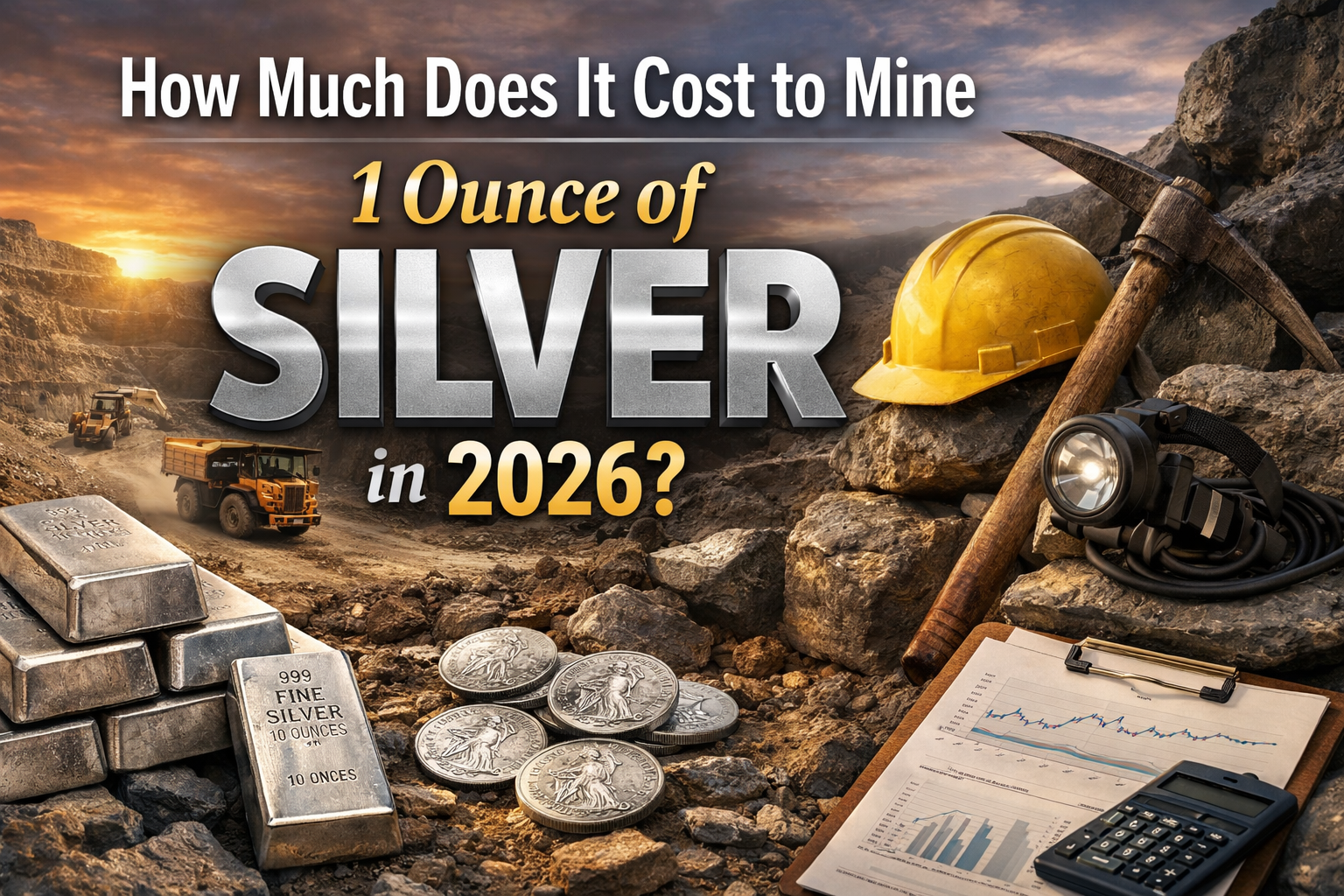
How Much Does It Cost to Mine One Ounce of Silver in 2026? The Real Floor Behind Silver Prices
Every silver investor watches the spot price.
But almost no one talks about the number quietly holding the entire silver market together:
The cost to mine one ounce of silver.
Because here’s the reality — production cost acts as a long-term price floor. When mining becomes more expensive, silver prices eventually adjust.
If you’re stacking physical silver, following supply deficits, or reading our weekly outlook at The Week Ahead, understanding mining economics gives you a serious edge.
Let’s break it down clearly and accurately.
What Does It Cost to Mine One Ounce of Silver Today?
The industry uses a metric called All-In Sustaining Cost (AISC). This includes:
- Operating expenses
- Labor
- Energy
- Sustaining capital
- Royalties and taxes
According to S&P Global’s 2026 Mine Cost Outlook, the global weighted average AISC for silver is projected at $23.44 per ounce in 2026, up from $22.59 in 2025.
However, independent research from SiiVer Silver shows the 2024 global AISC averaged approximately $26.86 per ounce.
Why the variation?
Because most silver is produced as a byproduct of mining gold, copper, zinc, and lead. That means reported costs are often reduced by “byproduct credits.”
In reality, if base metal prices weaken, true production cost can rise closer to the mid-$20s per ounce.
What Did It Cost in the Past?
Mining silver used to be dramatically cheaper.
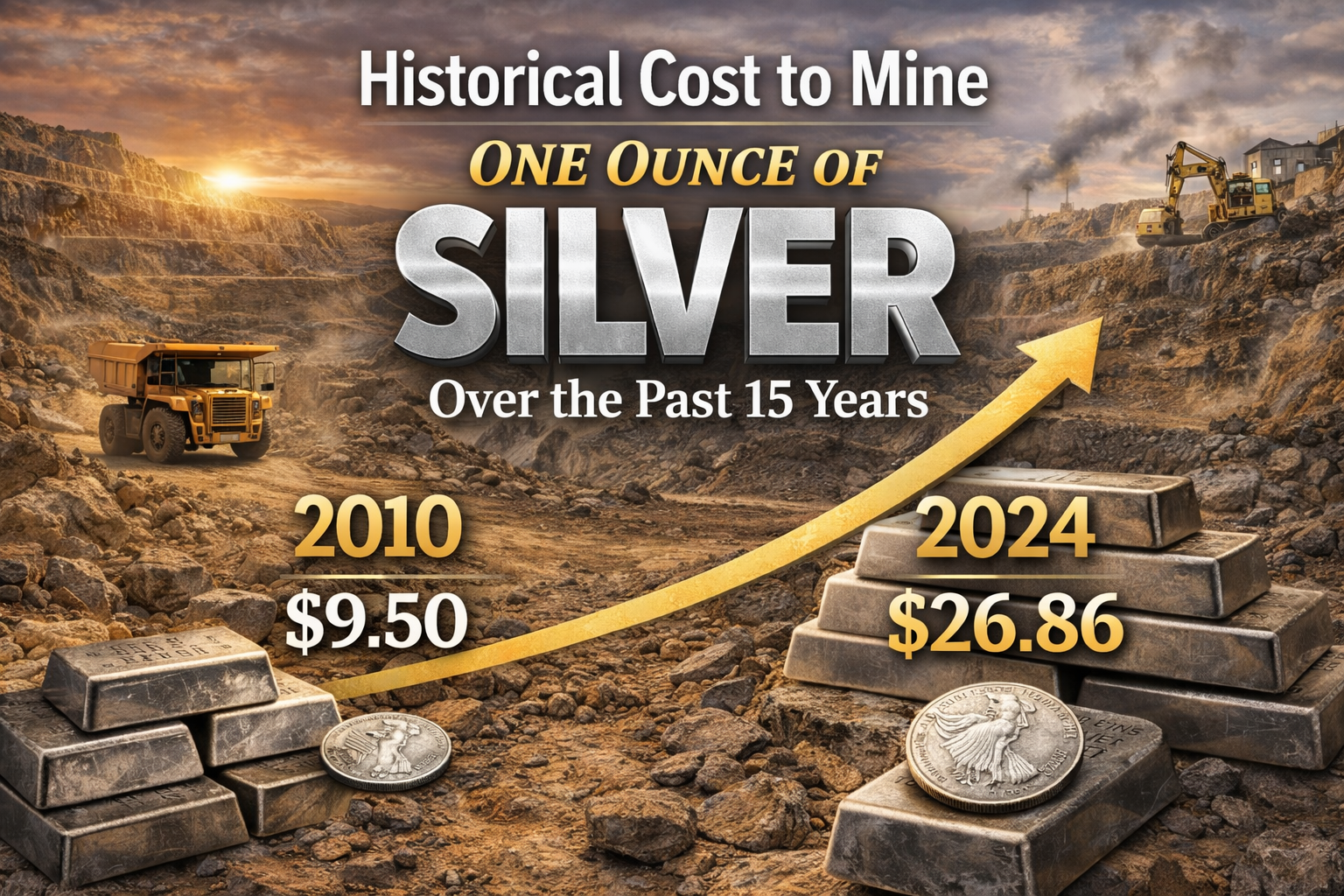
In 2010, the average AISC to mine one ounce of silver was roughly $9.50 per ounce according to SiiVer Silver research.
By 2024, that number had nearly tripled to $26.86 per ounce.
Even adjusting for inflation, real mining costs have more than doubled over the past decade.
Meanwhile, silver prices did not triple during that same period.
This margin compression is important. Historically, when mining margins shrink too far, supply tightens — and prices eventually respond upward.
GoldBroker’s market analysis noted that production costs doubled from 2016–2024 while silver prices rose only about 50% during that time. They also observed that low mining margins often precede major price rallies.
Why Mining Costs Keep Rising
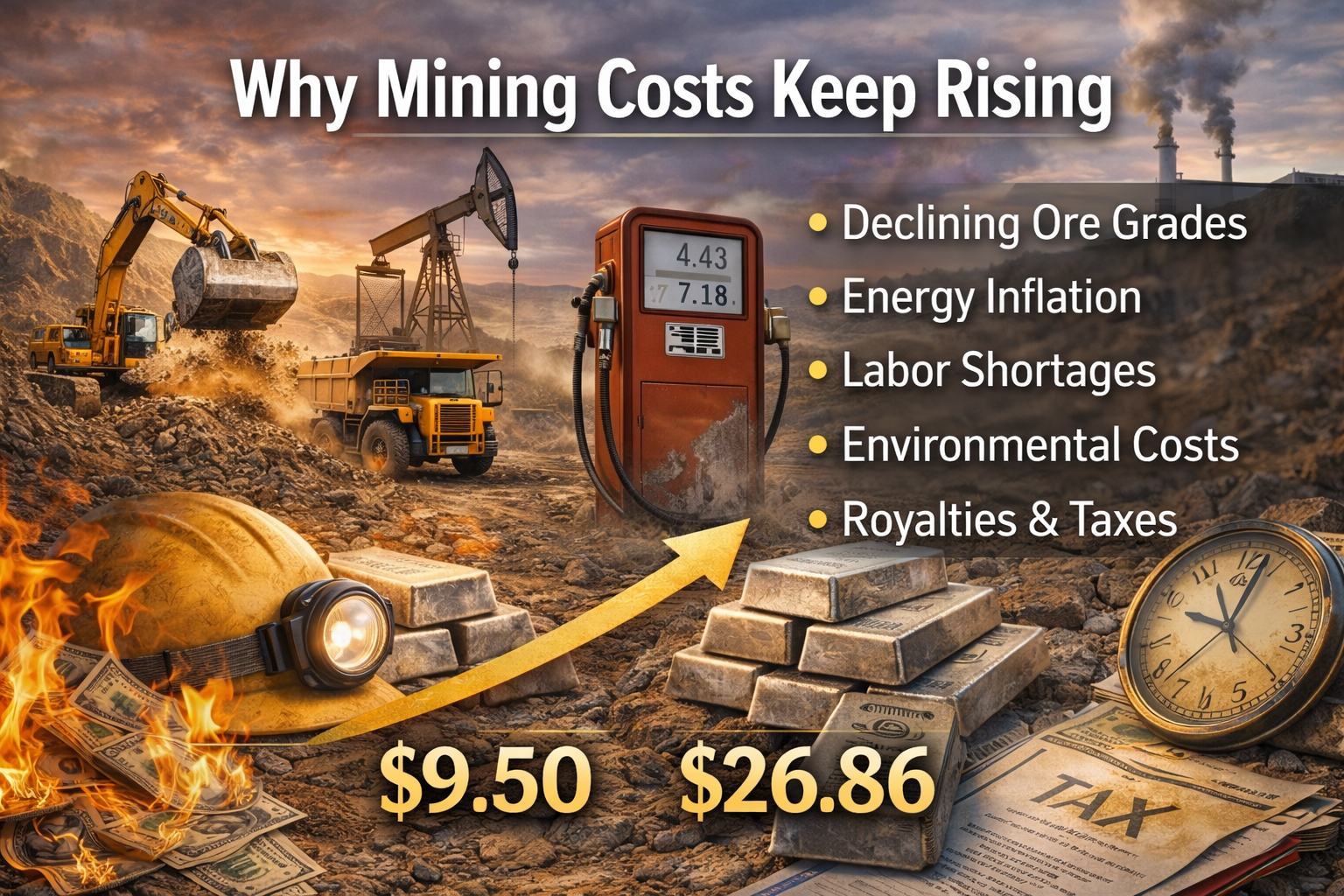
Several structural forces are driving costs higher:
- Declining ore grades — miners must process more rock to extract the same silver.
- Energy inflation — diesel and electricity are major cost drivers.
- Labor shortages in key mining jurisdictions.
- Environmental compliance costs increasing worldwide.
- Government royalties and taxes rising in major producing nations.
According to SiiVer Silver research, AISC is expected to continue rising modestly due to deeper mining and inflationary pressure.
This creates something very important for investors:
A rising cost floor.
What Are Analysts Saying About Future Mining Costs?
Major institutions like S&P Global project continued moderate cost increases through 2026 and beyond.
Mexico and China remain relatively low-cost producers, but Peru and Poland are seeing double-digit cost increases.
Meanwhile, Neo Wealth Management identified $25–$30 per ounce as a long-term “economic floor” for silver based on global mining economics.
Source: Economic Times — Silver at a Crossroads
They note that sustained prices below $25 could make nearly half of global silver production uneconomical.
In other words: below production cost, supply begins to shut down.

How Mining Cost Directly Impacts Silver Prices
Silver prices are driven by many forces:
- Monetary policy
- Industrial demand
- Retail investment flows
- Market sentiment
- Possible manipulation events (see our breakdown here: Did JP Morgan Manipulate Silver in January 2026?)
But over longer cycles, mining cost acts as a stabilizer.
When prices fall below production cost:
- Mines shut down
- Supply tightens
- Inventories drop
- Prices eventually rebound
This is why structural deficits matter — something we explained in The Silver Shortage Isn’t What You Think.
What This Means for Physical Silver Investors
If production cost continues trending toward the mid-$20s and higher, it becomes increasingly difficult for silver to sustain long-term prices far below that level.
That’s part of the reason many investors are focusing on physical ownership rather than paper exposure. If you’re debating that angle, read: Is Physical Silver Safer Than ETFs?
Retail demand is also playing a growing role, as we covered in Retail Investors Are Quietly Driving the Silver Market.
And if you're new to stacking, this may be the right time to revisit: Why Early 2026 Can Be a Smart Time to Start Stacking Silver.
The Hidden Risk: Fake Silver in a High-Cost Environment
When mining costs rise and silver prices follow, counterfeiting becomes more profitable.
We are already seeing increased fake silver on marketplaces and auction sites.
Before buying, read: How to Tell if Sterling Silver is Real
And this critical guide: Fake Silver & Gold Flooding Marketplaces
Could the World Ever Return to Gold & Silver Money?
As mining costs rise and fiat currency faces inflationary pressure, some analysts argue that production cost could play a major role in any future commodity-backed monetary system.
If you're curious about that bigger picture, explore: Could the World Actually Return to Gold and Silver Money?
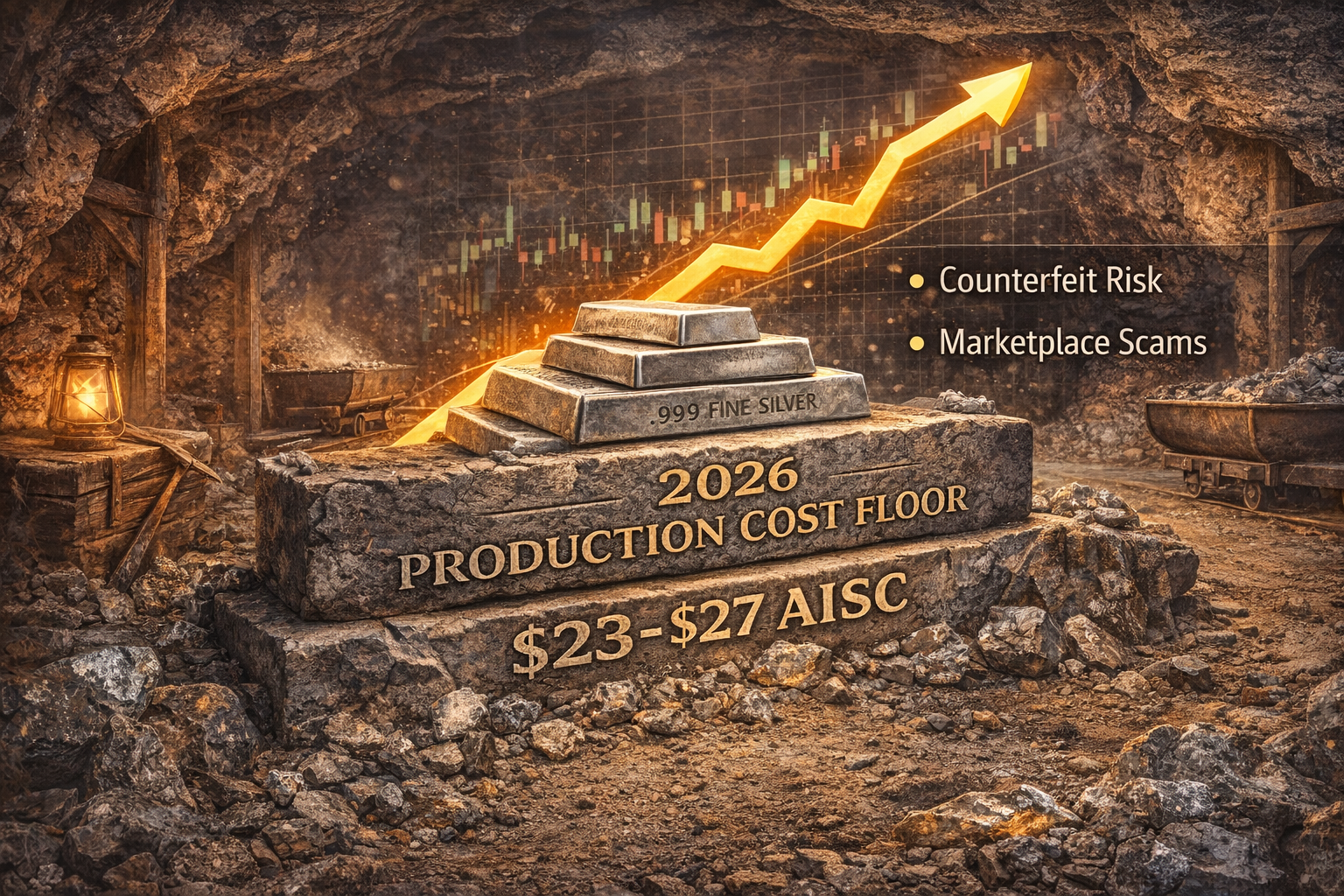
Final Takeaway: The Real Floor Under Silver
As of 2026, the global cost to mine one ounce of silver sits roughly between $23 and $27 per ounce, depending on methodology and byproduct credits.
In 2010, it was under $10.
That trend matters.
Because while silver prices can overshoot both directions short-term, over the long run they rarely remain below production cost.
Mining economics quietly form the foundation beneath the silver market.
And smart investors pay attention to foundations.