Is Physical Silver Safer Than ETFs? What Smart Investors Should Really Know
Is physical silver safer than ETFs?
With economic uncertainty rising and volatility shaking financial markets, more investors are asking whether owning real silver is safer than owning silver shares inside a brokerage account.
On one side, you have physical silver — coins and bars you can actually hold.
On the other, you have silver ETFs like the iShares Silver Trust (SLV) and the Aberdeen Standard Physical Silver Shares ETF (SIVR) — easy to buy, easy to sell, sitting inside your brokerage account.
Both give you exposure to silver.
But they are not the same thing.
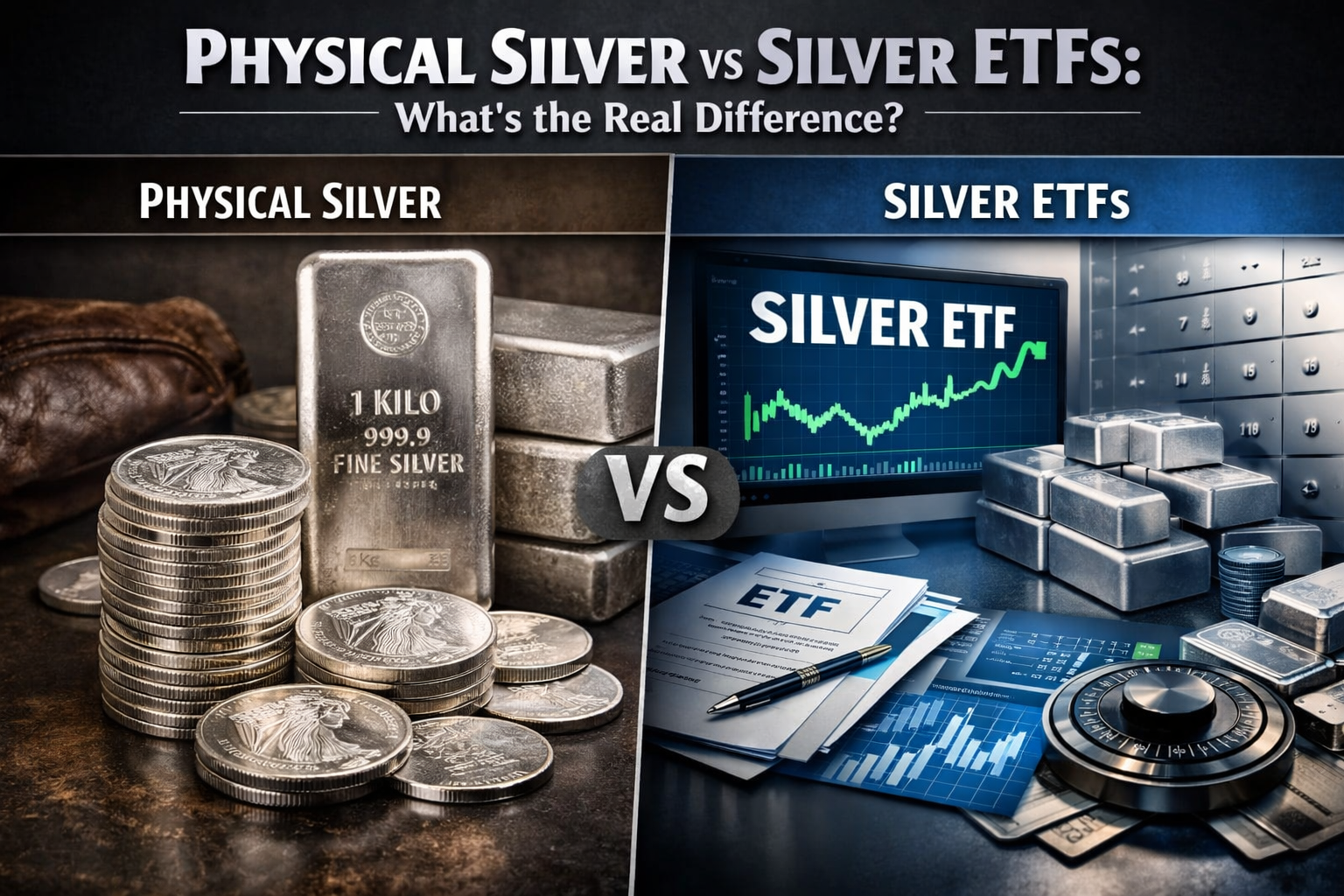
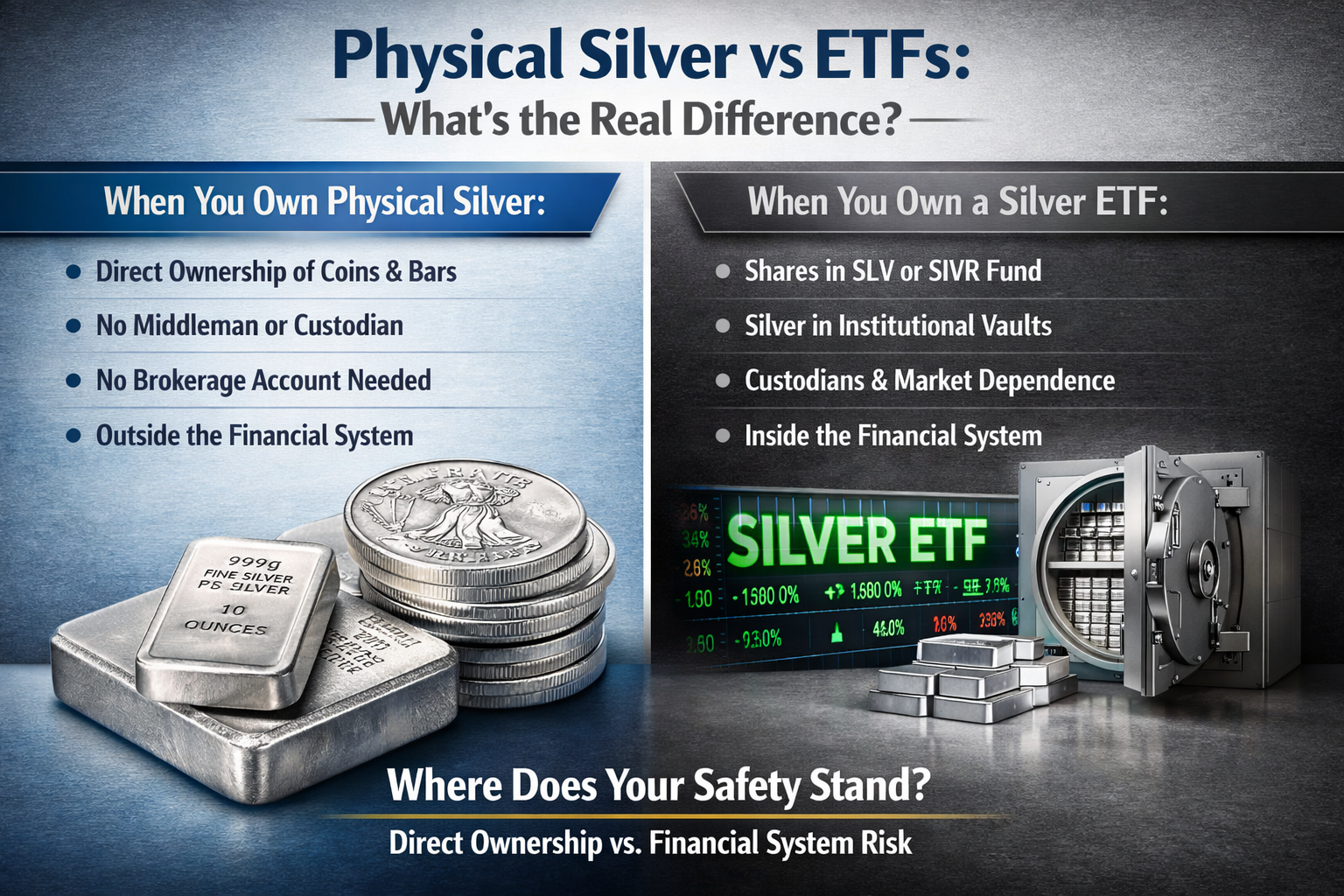
Physical Silver vs ETFs: What’s the Real Difference?
Let’s simplify it.
When You Own Physical Silver:
- You directly own coins or bars.
- No custodian stands between you and your metal.
- No brokerage account required.
- No reliance on financial infrastructure.
When You Own a Silver ETF:
- You own shares in a fund like SLV or SIVR.
- The silver is stored in institutional vaults.
- You depend on custodians, trustees, and market liquidity.
- Your ownership exists inside the financial system.
That structural difference is where the safety debate begins.
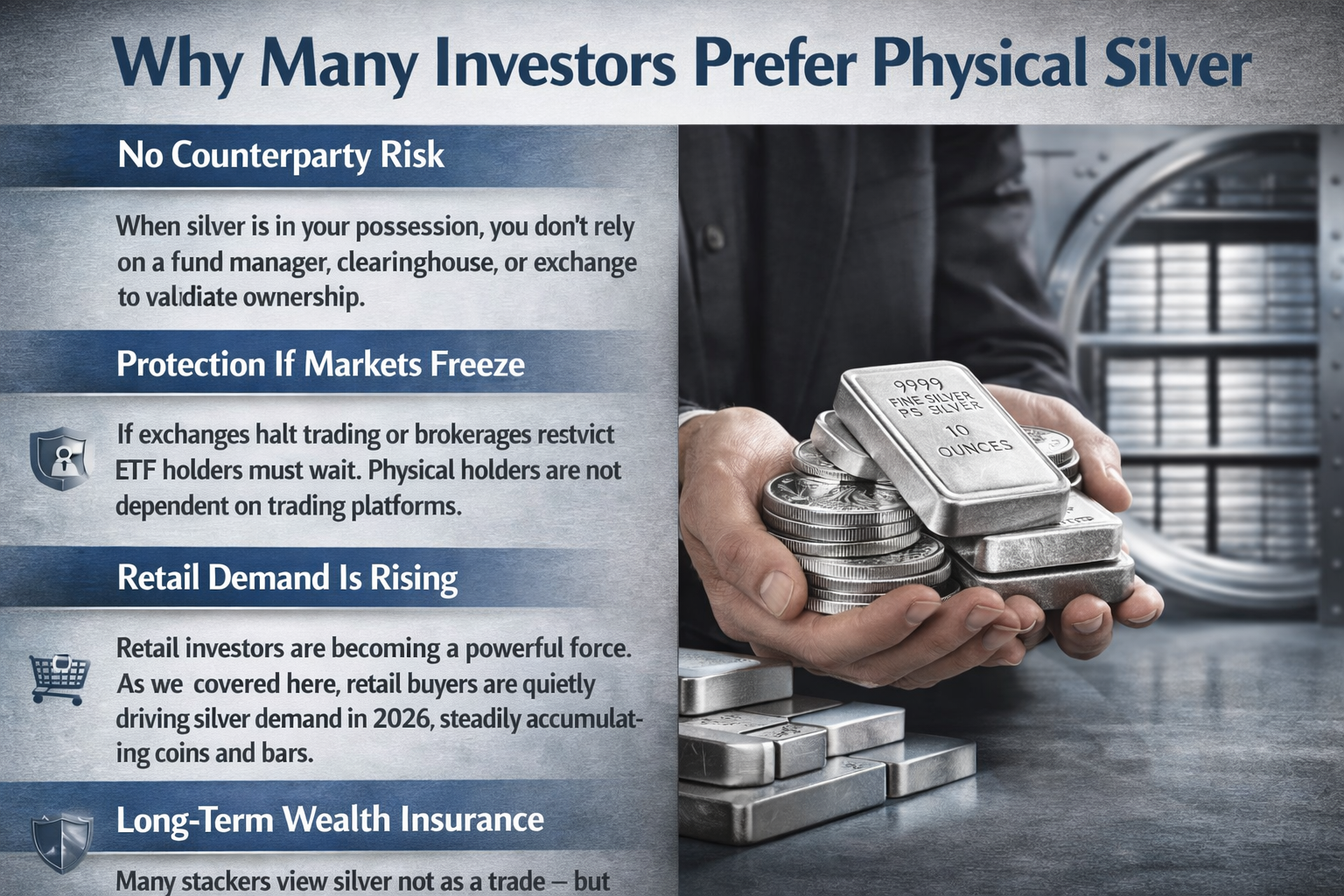
Why Many Investors Prefer Physical Silver
No Counterparty Risk
When silver is in your possession, you don’t rely on a fund manager, clearinghouse, or exchange to validate ownership.
Protection If Markets Freeze
If exchanges halt trading or brokerages restrict activity, ETF holders must wait. Physical holders are not dependent on trading platforms.
Retail Demand Is Rising
Retail investors are becoming a powerful force. As we covered here, retail buyers are quietly driving silver demand in 2026, steadily accumulating coins and bars.
This isn’t short-term speculation. It’s long-term stacking.
Long-Term Wealth Insurance
Many stackers view silver not as a trade — but as protection outside the system.
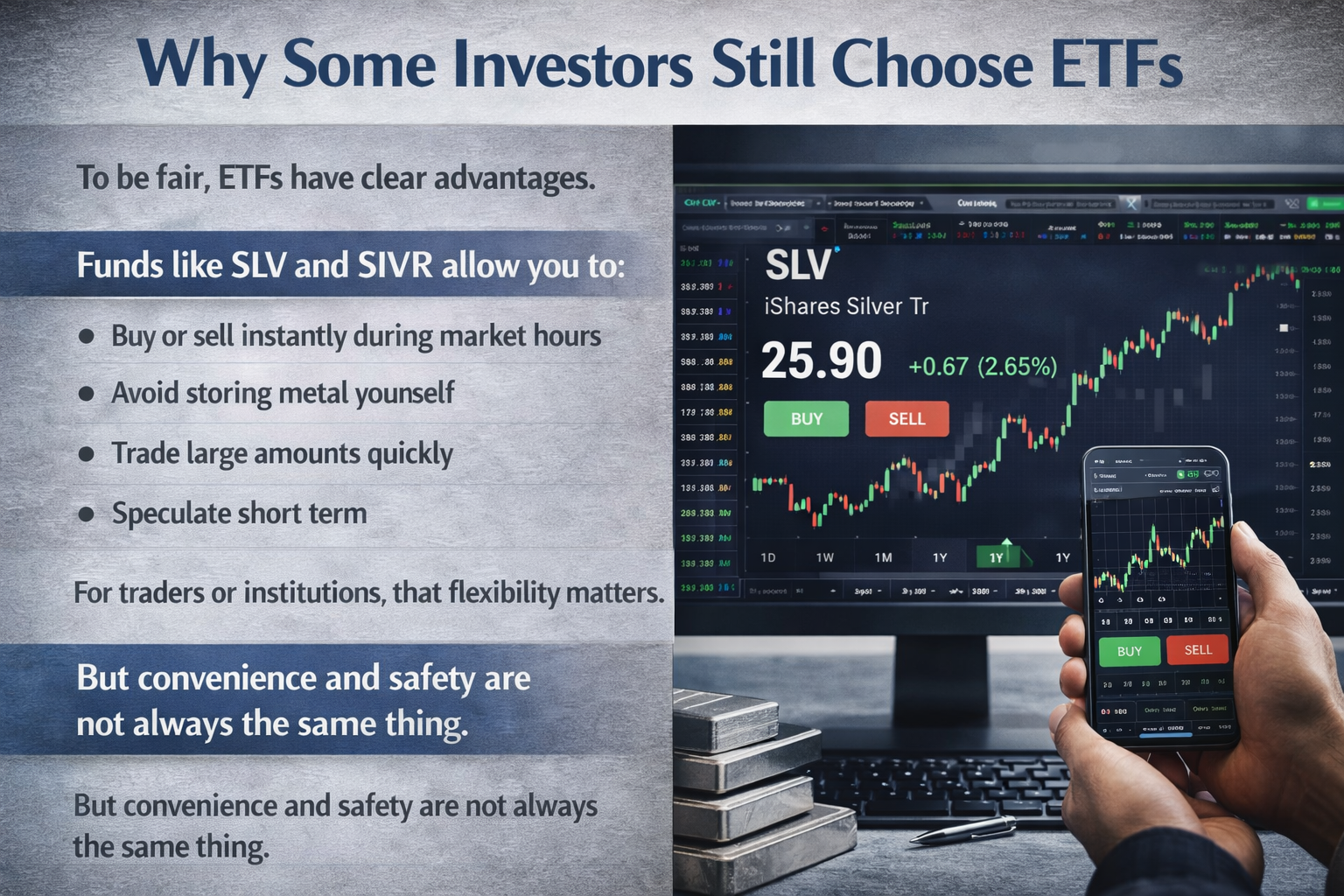
Why Some Investors Still Choose ETFs
To be fair, ETFs have clear advantages.
Funds like SLV and SIVR allow you to:
- Buy or sell instantly during market hours
- Avoid storing metal yourself
- Trade large amounts quickly
- Speculate short term
For traders or institutions, that flexibility matters.
But convenience and safety are not always the same thing.
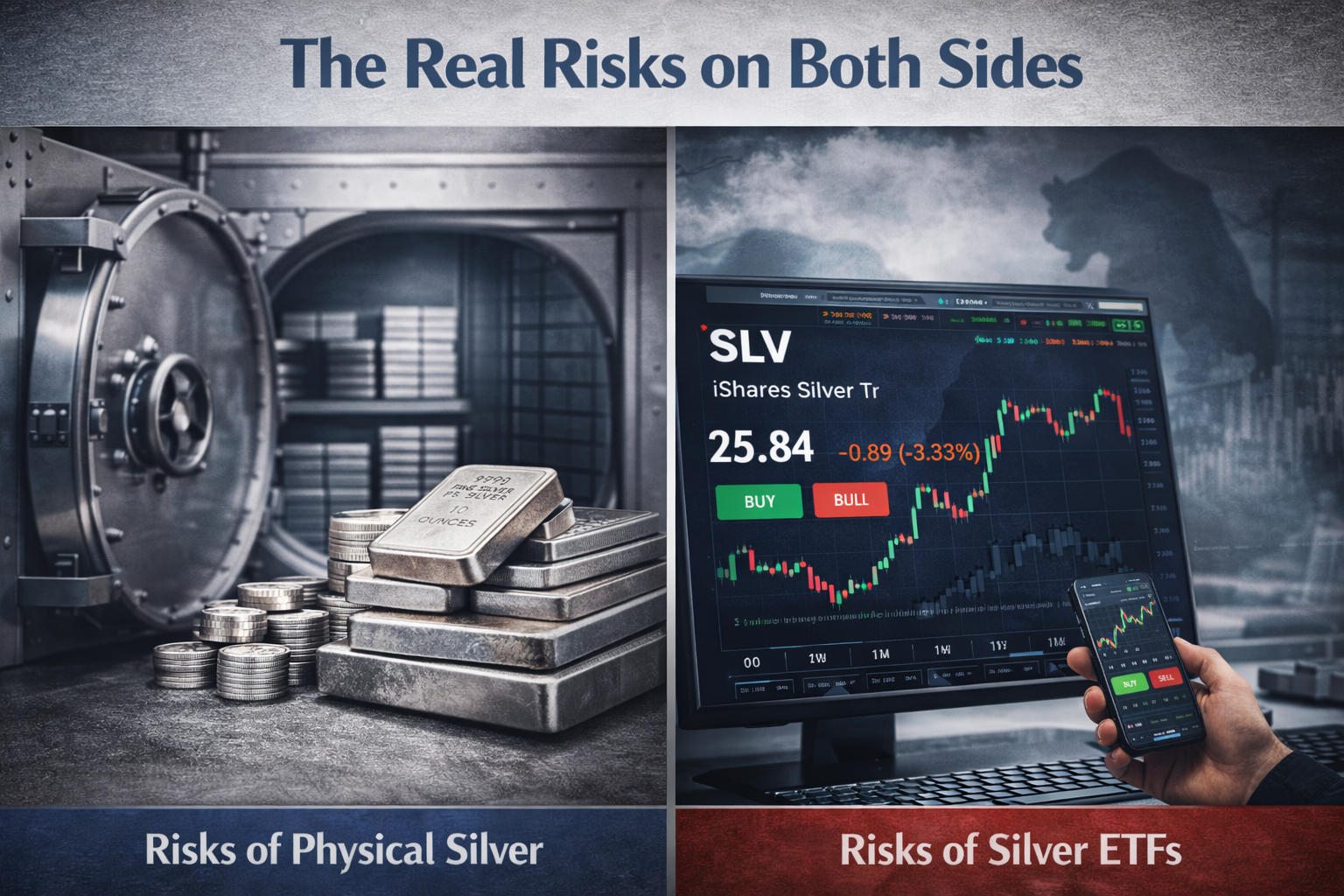
The Real Risks on Both Sides
Risks of Physical Silver
- You must store it securely.
- You may pay premiums over spot.
- Insurance costs can apply.
- Counterfeits exist in online marketplaces.
If you buy peer-to-peer, education is critical. We recently covered how fake silver and gold are flooding online marketplaces and how to protect yourself.
Risks of Silver ETFs
- Counterparty and custodial risk
- Dependence on exchanges staying open
- Reliance on financial infrastructure stability
- Potential disconnect from retail physical demand
ETFs are structured and regulated, but they are still financial products tied to broader market systems.
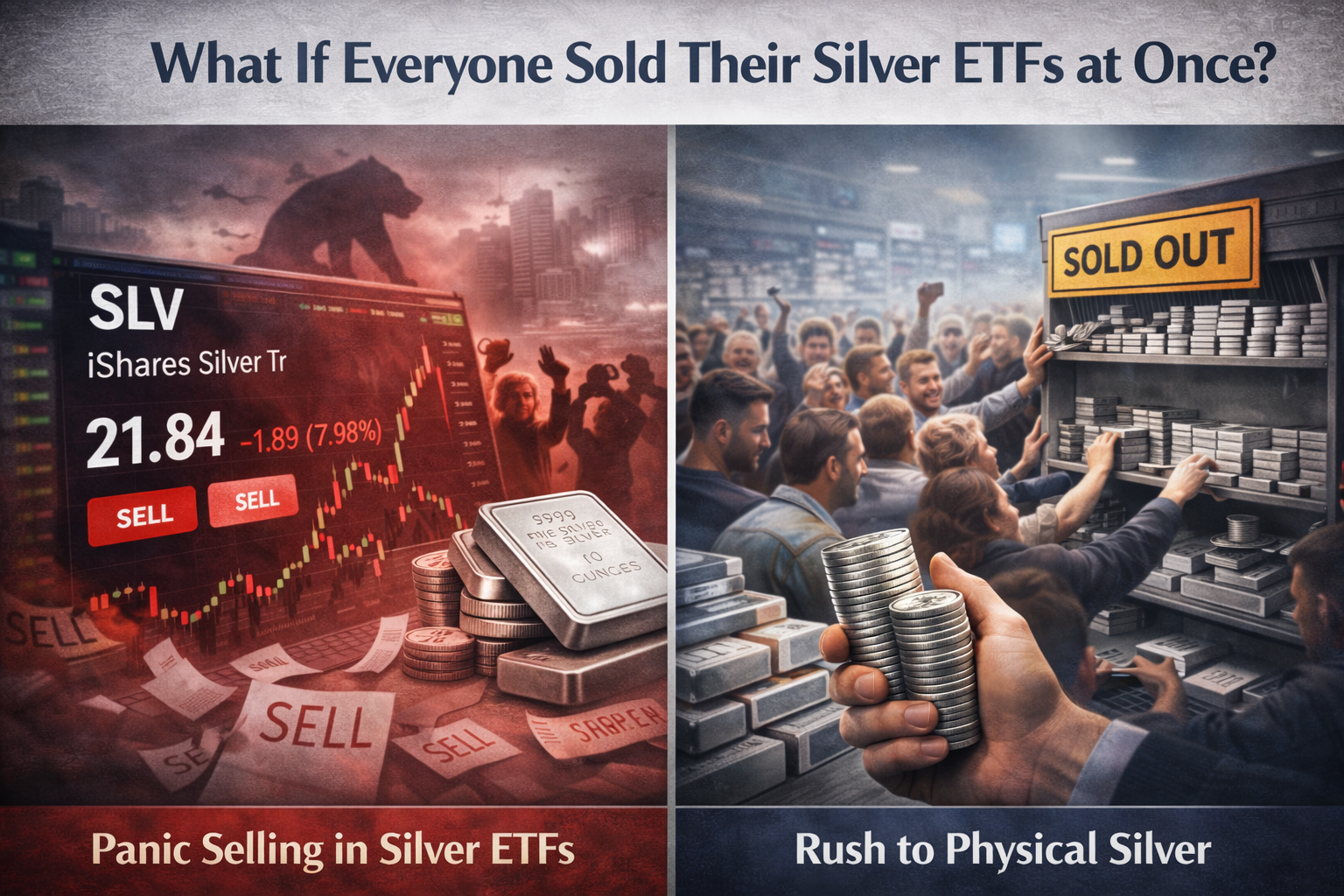
What If Everyone Sold Their Silver ETFs at Once?
This is where things get interesting.
Scenario 1: Massive ETF Liquidation
If the majority of SLV and SIVR holders dumped shares simultaneously:
- Silver prices could drop sharply in the short term.
- Authorized participants would redeem shares.
- Volatility would spike.
- The paper price could temporarily fall — even if long-term demand remained strong.
Scenario 2: A Rush From Paper to Physical
Now flip it. If confidence in ETFs weakened and investors rushed into physical silver instead:
- Retail shortages could appear.
- Premiums over spot could surge.
- Spot price and real-world coin pricing could temporarily diverge.
We’ve seen early versions of this dynamic before during heavy buying waves.
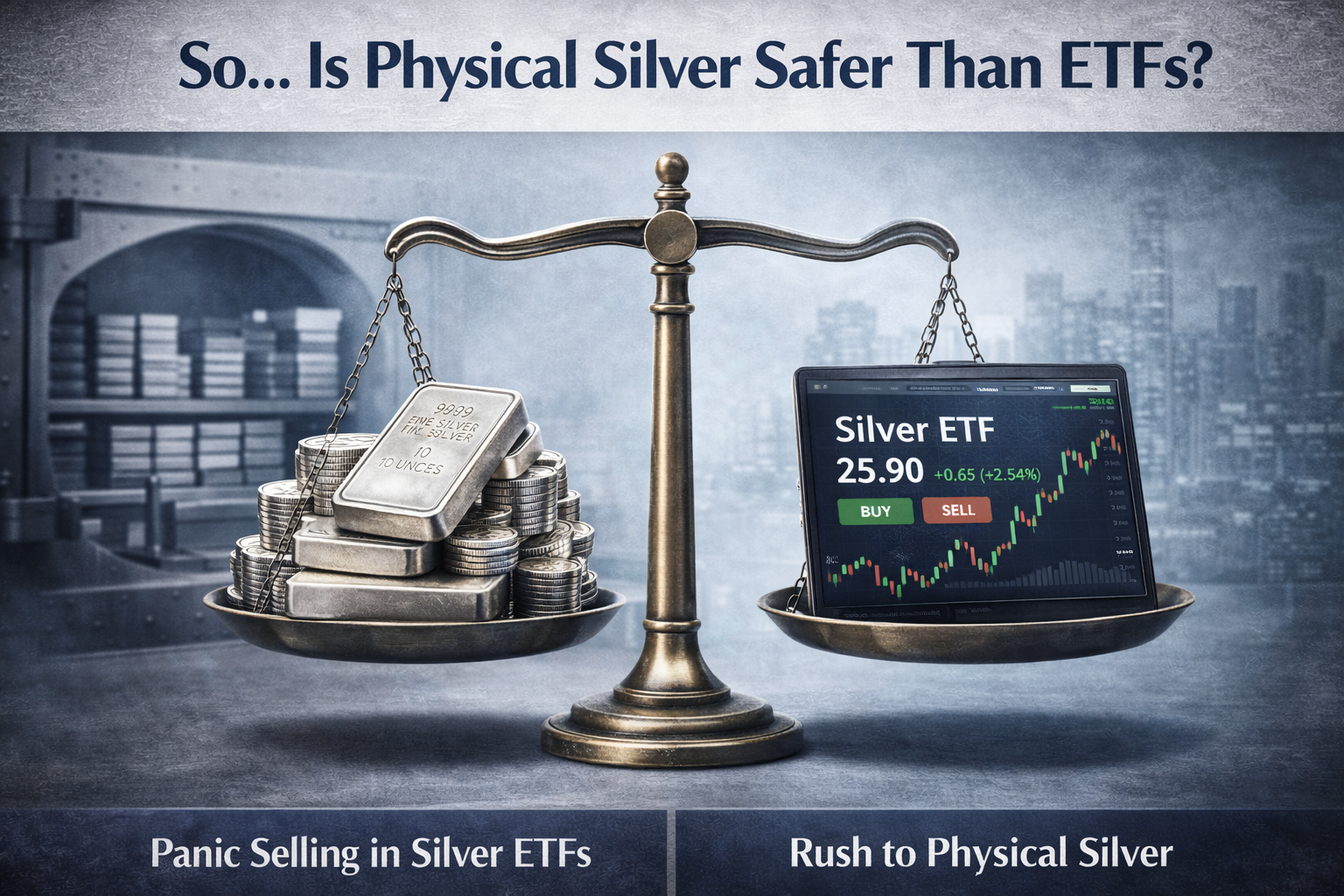
So… Is Physical Silver Safer Than ETFs?
The honest answer depends on how you define “safe.”
If safety means fast trading and liquidity — ETFs have the edge.
If safety means direct ownership with no intermediaries — physical silver stands apart.
That’s why many experienced investors hold both. But when it comes to systemic risk protection, physical silver continues attracting long-term conviction.
If you're considering building a position, you may also want to read why early 2026 could be a smart time to start stacking silver.
Owning silver and owning a silver-based financial product are two very different experiences.
Understanding that difference may be one of the most important investment decisions you make.