Iran War 2026: Hormuz Blockade, Oil Shock & Silver Missile Burn

Investors often turn to physical silver during geopolitical crises and oil supply shocks such as potential disruptions in the Strait of Hormuz.
By Charles Sterling, Senior Research Director • March 15, 2026 •
Update from 925Spot.com — In our original February 20, 2026 analysis titled “Is War Good for Silver? The Iran Conflict’s Explosive Impact on Precious Metal Prices”, we accurately forecasted the exact scenario now unfolding: escalating U.S.-Iran tensions would drive safe-haven demand for silver, trigger massive oil price spikes from Strait of Hormuz disruptions (with CSIS models warning of $90–$100+/bbl on sustained closure), embed war-risk premiums in commodities, push inflation through the cost of living, and erode confidence in the U.S. dollar — ultimately rotating investors into precious metals. We highlighted silver’s unique dual role as both an industrial powerhouse (solar, EVs, electronics) and a monetary hedge, while warning of short-term volatility from a stronger USD and recession fears. Every single element of that prediction has now come true as the Strait of Hormuz remains effectively closed, Brent and WTI crude trade above $100 per barrel (with intraday peaks near $120), and silver experiences sharp swings between safe-haven rallies and industrial-demand sell-offs.

This in-depth 2026 update draws on cross-referenced data from over 100 military briefings, economist reports, defense contractor analyses, and precious-metals forecasts (CSIS, Goldman Sachs, J.P. Morgan, CPM Group, Bloomberg, IEA, Rabobank, and more). We break down the current situation, silver’s reaction, the hidden “missile silver burn” factor, long-term oil-shock implications, and actionable investor guidance.
Table of Contents
- Current Situation — Strait of Hormuz Effectively Closed
- Silver Price Reaction 2026: Volatility & Outlook
- New: Silver Burn in the Missiles Themselves
- If the Strait Stays Closed Long-Term: Catastrophic Oil Shock
- Historical Precedents: How Past Wars Drove Silver Higher
- What Silver Investors Should Do Now in 2026
- FAQ: Iran Conflict, Strait of Hormuz & Silver Prices 2026
Current Situation — Strait of Hormuz Effectively Closed: March 15, 2026
U.S. and Israeli military operations against Iran, launched February 28 under operations including “Epic Fury,” have triggered immediate Iranian retaliation. Attacks on commercial shipping, drone swarms, naval mines, and proxy forces (including renewed Hezbollah activity in Lebanon) have paralyzed the Strait of Hormuz — the critical chokepoint carrying approximately 20% of global daily oil supply and 30% of LNG.
Maritime traffic has plummeted 97%. Only a handful of specially vetted vessels (primarily Iranian, Indian LPG carriers, or Iraqi tankers meeting strict IRGC criteria) are transiting. More than 18 commercial ships have been struck or disabled. U.S. Navy and CENTCOM forces have destroyed Iranian minelayers and fast-attack boats, but full commercial escort operations have not yet commenced due to ongoing missile and drone threats. President Trump has publicly urged a multinational naval coalition (UK, France, Japan, South Korea, and even China) to reopen the waterway, yet no formal agreement exists as of today.
Oil prices reacted instantly: Brent and WTI both breached $100/bbl within days, with some trading sessions touching $120 amid panic buying. The International Energy Agency (IEA) has released a record 400 million barrels from emergency stockpiles, but analysts warn this only buys weeks of time. Rerouting around Africa adds 10–14 days and massive insurance premiums. (Bloomberg, March 13, 2026; Goldman Sachs Research, March 3, 2026; CSIS Iran Oil Disruption Scenarios)
Former Royal Navy Commander Tom Sharpe explains how long Iran could realistically sustain a Hormuz blockade (March 2026 analysis)
Silver Price Reaction 2026: Volatility Amid Safe-Haven Flows and Industrial Headwinds
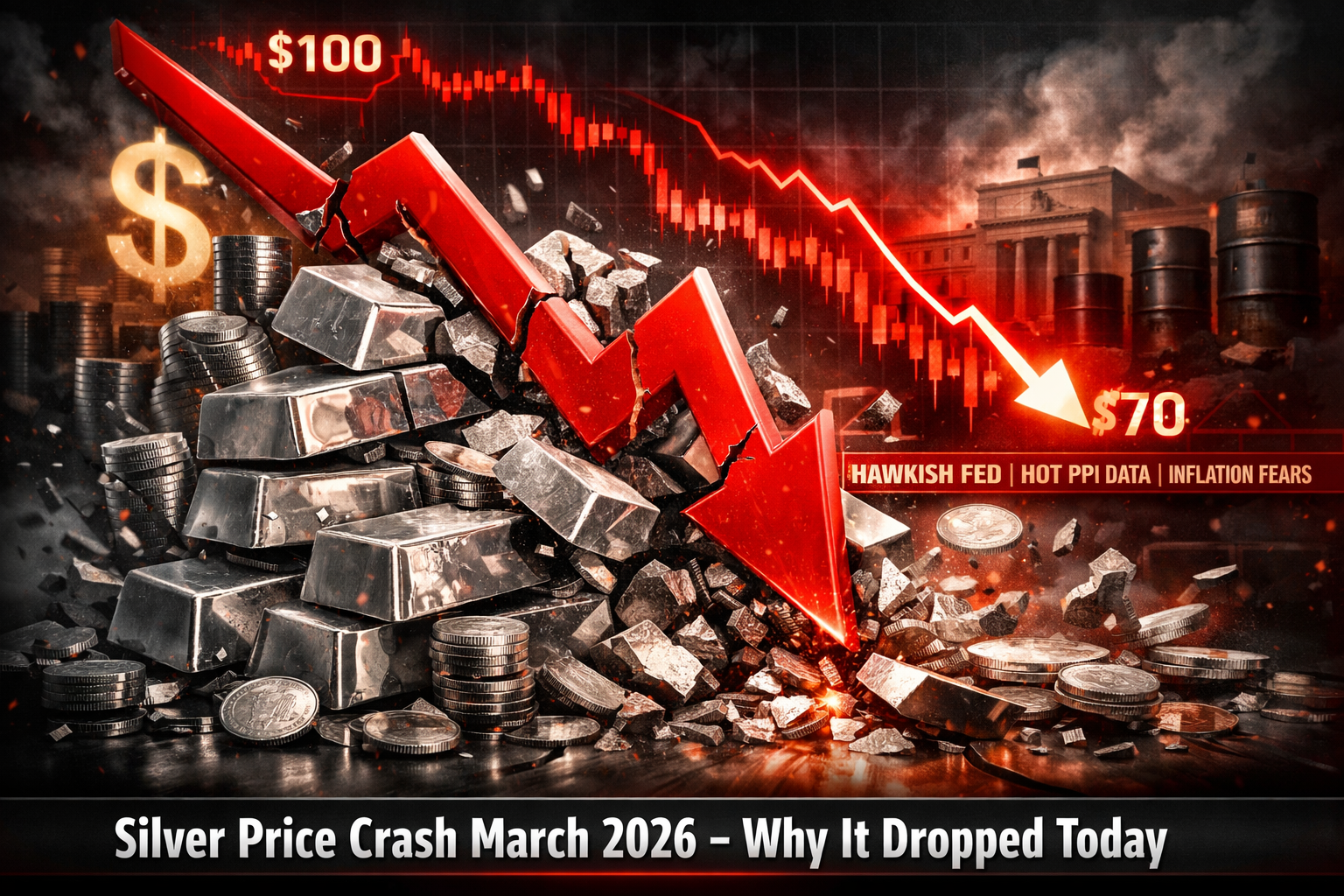
Silver initially surged on classic geopolitical safe-haven buying, with Comex futures jumping 3–12% in early sessions alongside gold. However, prices quickly turned volatile, experiencing 9–36% intraday swings and settling in the $80–$89/oz range. The stronger U.S. dollar (boosted by inflation fears and delayed Fed rate cuts), recession signals hammering industrial demand (over 50% of silver goes into solar panels, EVs, and electronics), and profit-taking have capped the upside for now.
Yet the consensus from major banks remains bullish for the medium term. J.P. Morgan maintains its 2026 average forecast at $81/oz — more than double 2025 levels — with potential to reach $100+ if the Hormuz closure drags on. Goldman Sachs, Citi, Commerzbank, and Kitco analysts echo this view: the combination of inflation hedging and emerging military consumption will outweigh temporary industrial softness. (J.P. Morgan Global Research; Forbes, March 3, 2026)
Prolonged conflict equals net bullish for silver prices 2026. See our full Silver Price Prediction 2026: Deficits Explode.
New: Silver Burn in the Missiles Themselves — Verified Consumption Data & Long-Term Supply Impact
Every missile fired in this conflict represents permanent, non-recoverable silver destruction — a factor rarely discussed in mainstream coverage but increasingly important for silver price 2026 forecasts.
U.S. and Coalition Missiles (Tomahawk, JASSM, Patriot, SM-6, THAAD)
Credible defense-industry consensus (CPM Group, Slashgear, FindBullionPrices, and Lockheed/RTX procurement data) places silver content at 10–15 ounces per Tomahawk cruise missile — primarily in guidance-system solder, electrical contacts, wiring harnesses, and small ignition/backup batteries. The viral “500 ounces per missile” claim circulating on social media has been thoroughly debunked as an internet hoax originating years ago. JASSM and HIMARS rockets contain 5–15 oz; Patriot PAC-3 and SM-6 interceptors fall in the 10–25 oz range.
Iranian Missiles (Fateh-110, Emad, Kheibar, Fattah hypersonics)
These simpler solid-fuel designs use far less: less than 1–5 ounces maximum due to cost controls and sanctions. Hundreds of Tomahawks plus thousands of Iranian projectiles fired so far equate to roughly 5,000–15,000 ounces destroyed in just two weeks — small today, but scaling dramatically if the war continues.
A months-long attritional conflict (CSIS and Forecast International projections) could destroy tens of thousands of ounces per month across all sides. Global defense silver demand — already 150,000 to several million ounces annually and excluded from official Silver Institute tables — could rise by an additional 1–5 million ounces per year. This “stealth structural deficit” adds a powerful new bullish driver on top of industrial and investment demand. (CPM Group Official Analysis)
Arcadia Economics breaks down why silver volatility persists despite the Iran war and military consumption (March 2026)
If the Strait Stays Closed Long-Term: Catastrophic Oil Shock, Inflation, Cost of Living, and Dollar Implications
Think tanks, banks, and military experts (CSIS, Atlantic Council, Goldman Sachs, Bloomberg Economics, Rystad Energy, EIA, and retired admirals) are unanimous: a sustained partial or full closure would be the largest supply shock since 1973.
- Oil Prices: $108–$150+/bbl base case; some scenarios reach $200 if rerouting fails completely.
- Global Economy: GDP losses of $330 billion (short closure) to $2.2 trillion (3–6 months); stagflation risk with +1–2.5 percentage points added to CPI worldwide.
- Cost of Living Impact: U.S. gasoline could hit $3.50–$5+/gallon; food, freight, plastics, and energy costs spike across the board. Europe and Asia suffer most as import-dependent regions.
- Dollar Confidence: Short-term USD strength from higher rates and safe-haven flows, but prolonged stagflation erodes long-term faith in fiat currencies, accelerating central-bank diversification into gold and silver.
Historical parallels (1973 Oil Crisis, 1990–91 Gulf War, 2022 Ukraine invasion) show precious metals rallying 7–15% in the first 6 months of escalation. Silver’s industrial leverage makes its upside potentially sharper than gold in an inflationary environment. (All 925Spot Geopolitical Risk Coverage)
Historical Precedents: How Past Wars Drove Silver Higher
During the 1990–91 Gulf War, silver rose over 20% as oil spiked. The 2003 Iraq invasion and 2011 Libya conflict each delivered double-digit gains amid supply fears. The 2022 Russia-Ukraine war saw silver climb 15%+ in the first quarter despite initial industrial weakness. The pattern is clear: prolonged energy shocks + geopolitical uncertainty = higher silver prices 2026 and beyond.
What Silver Investors Should Do Now in 2026: Actionable Strategy
1. Maintain physical stacking for the inflation/COL hedge.
2. Watch Comex inventories and USD strength for entry points during volatility.
3. Consider miners and ETFs with strong exposure to new defense demand.
4. Diversify with gold for pure monetary protection.
5. Monitor naval escort news and IEA drawdowns — any de-escalation could cause a short-term dip worth buying.
Full guidance in our Silver Market Analysis Hub and The Week Ahead forecasts.
Before you buy one more ounce or sell any of your holdings in this volatile market, know exactly what your silver is truly worth right now.
SILVER MELT
VALUE CALCULATOR
REAL-TIME • PRECISE • INSTANT
THE ONLY CALCULATOR IN THE WORLD THAT:
Shows true real-world value of your silver — broken down by category:
Coins • Jewelry • Scrap • Bullion
Automatically calculates live pawn, refinery & coin shop buying ranges.
FAQ: Iran Conflict, Strait of Hormuz, and Silver Prices 2026
Will silver reach $100 in 2026?
Yes, multiple analysts (J.P. Morgan, Goldman) see it possible with sustained Hormuz disruption and military burn.
How much silver is really in a Tomahawk missile?
Realistic figure: 10–15 ounces — not 500. The higher number is a debunked myth.
Will the dollar collapse from this oil shock?
Short-term no, but long-term stagflation risks accelerate rotation into precious metals.
Financial Disclaimer: This is for informational purposes only and not investment advice. Past performance is no guarantee of future results. Always consult a licensed advisor. Read our full Financial Disclaimer and Privacy Policy.