The Silver Shortage Isn’t What You Think — And That’s Why Prices Haven’t Exploded
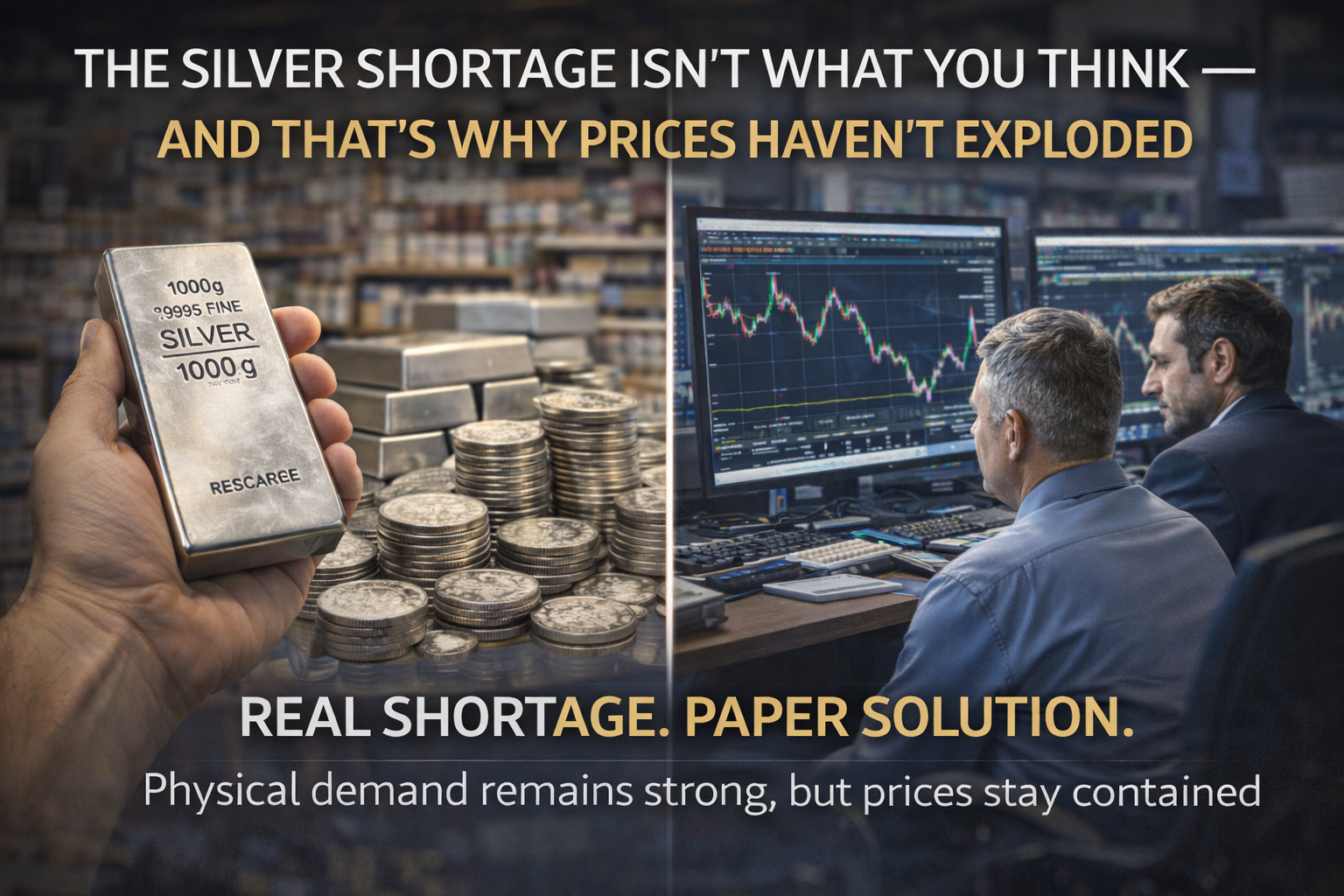
If silver is in short supply, why hasn’t the price reflected it?
That question frustrates nearly everyone who stacks physical silver. Coin shops report tight inventory. Premiums stay elevated. Delivery times stretch. Yet the spot price moves sideways — or worse.
The easy explanation is manipulation.
The more accurate explanation is structure.
There is a silver shortage — just not where most people are looking.
Why the Silver Shortage Narrative Feels Broken
For years, silver investors have been told a simple story:
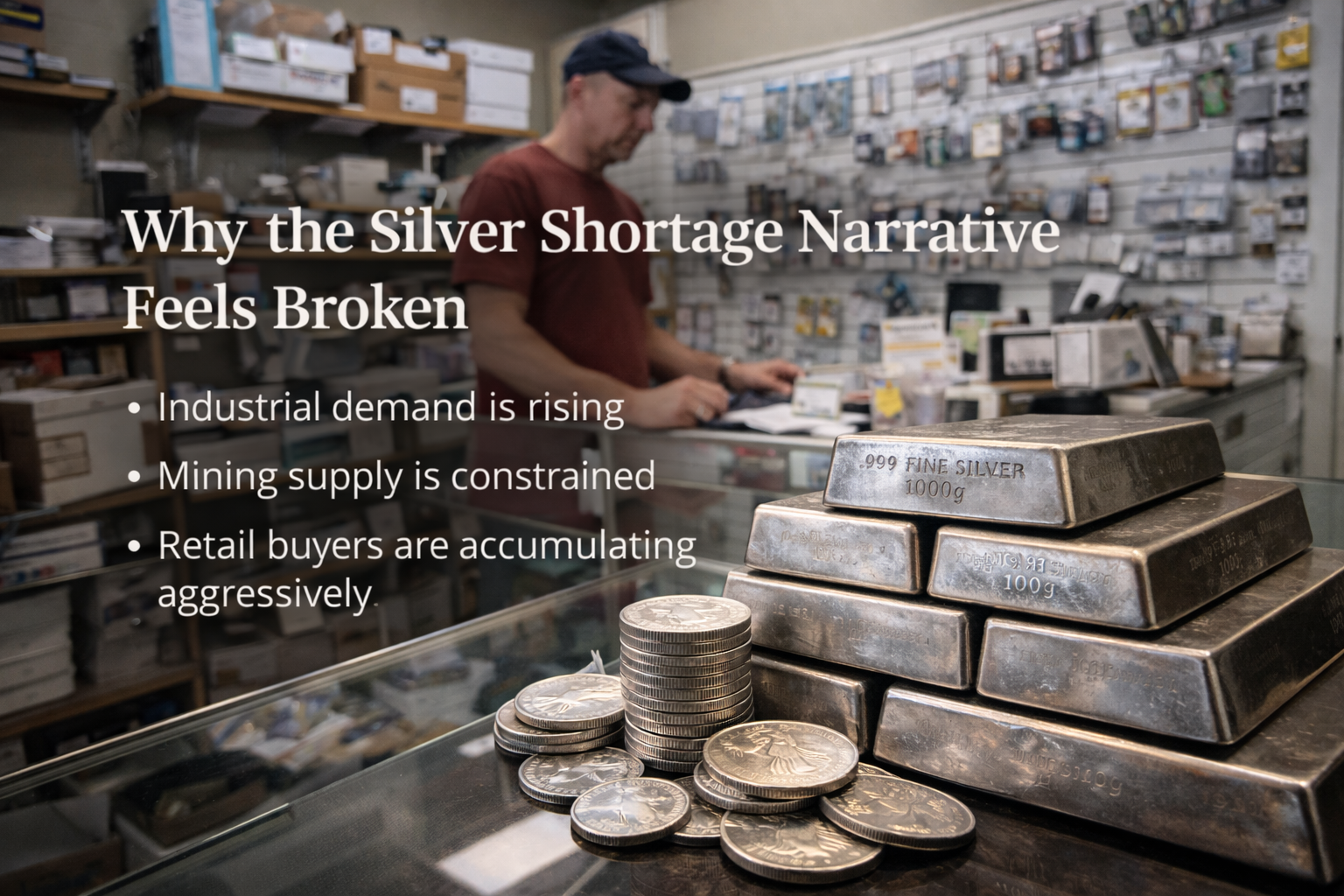
- Industrial demand is rising
- Mining supply is constrained
- Retail buyers are accumulating aggressively
Logically, prices should surge.
When they don’t, frustration sets in. Many conclude the market must be broken — or controlled.
But markets don’t break easily. They evolve.
To understand why silver prices haven’t exploded, you have to stop looking at coin shortages and start looking at how silver is actually priced.
Where Silver Prices Actually Come From
Silver is not priced by coin shops.
It’s not priced by mints.
It’s not priced by how hard it is to find a tube of rounds on a Saturday afternoon.
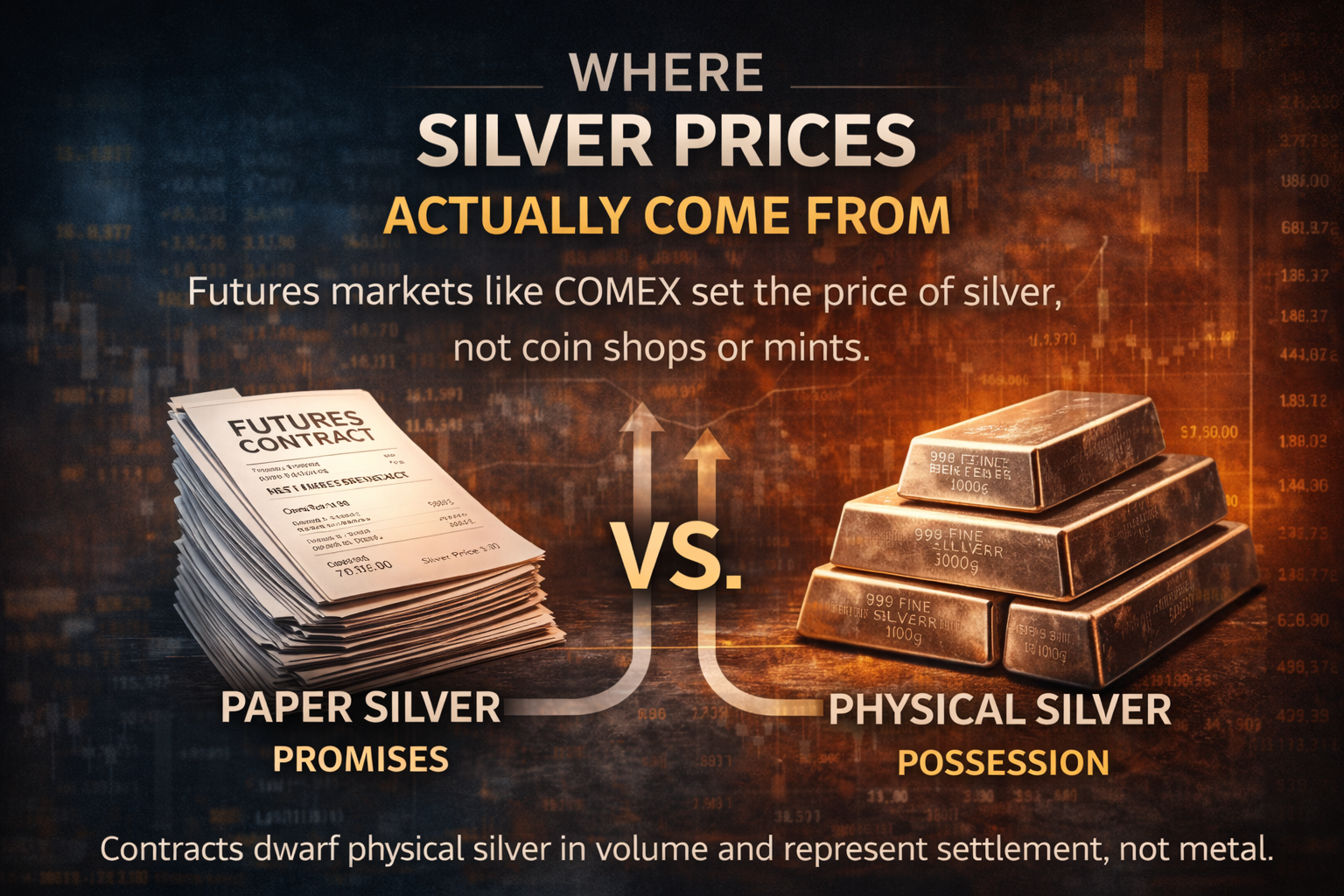
Silver prices are primarily discovered through futures markets — especially COMEX — where contracts are traded, not metal.
These contracts represent promises, not possession.
And the volume of paper silver traded every day dwarfs the amount of physical silver that can realistically be delivered.
The Shortage That Actually Exists (And the One That Doesn’t)
This is where the conversation needs to change.
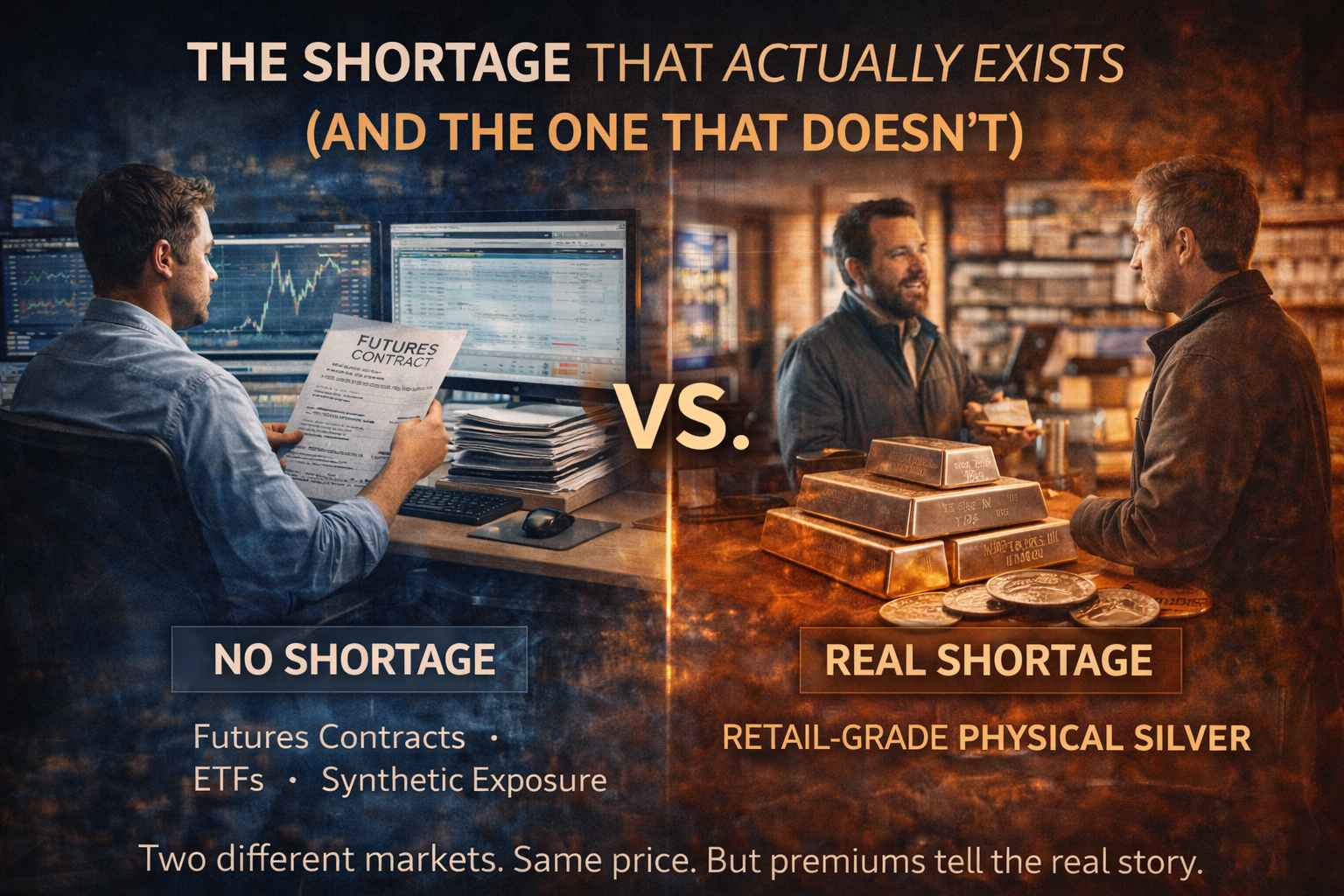
There is no meaningful shortage of paper silver. Futures contracts, ETFs, and synthetic exposure can be created almost instantly.
But there is a growing shortage of deliverable, retail-grade physical silver — the kind people can actually hold.
These are two entirely different markets operating under the same price.
That disconnect explains why premiums rise while spot prices stall.
It’s not that silver isn’t scarce.
It’s that scarcity is being absorbed in a part of the market that does not set the price.
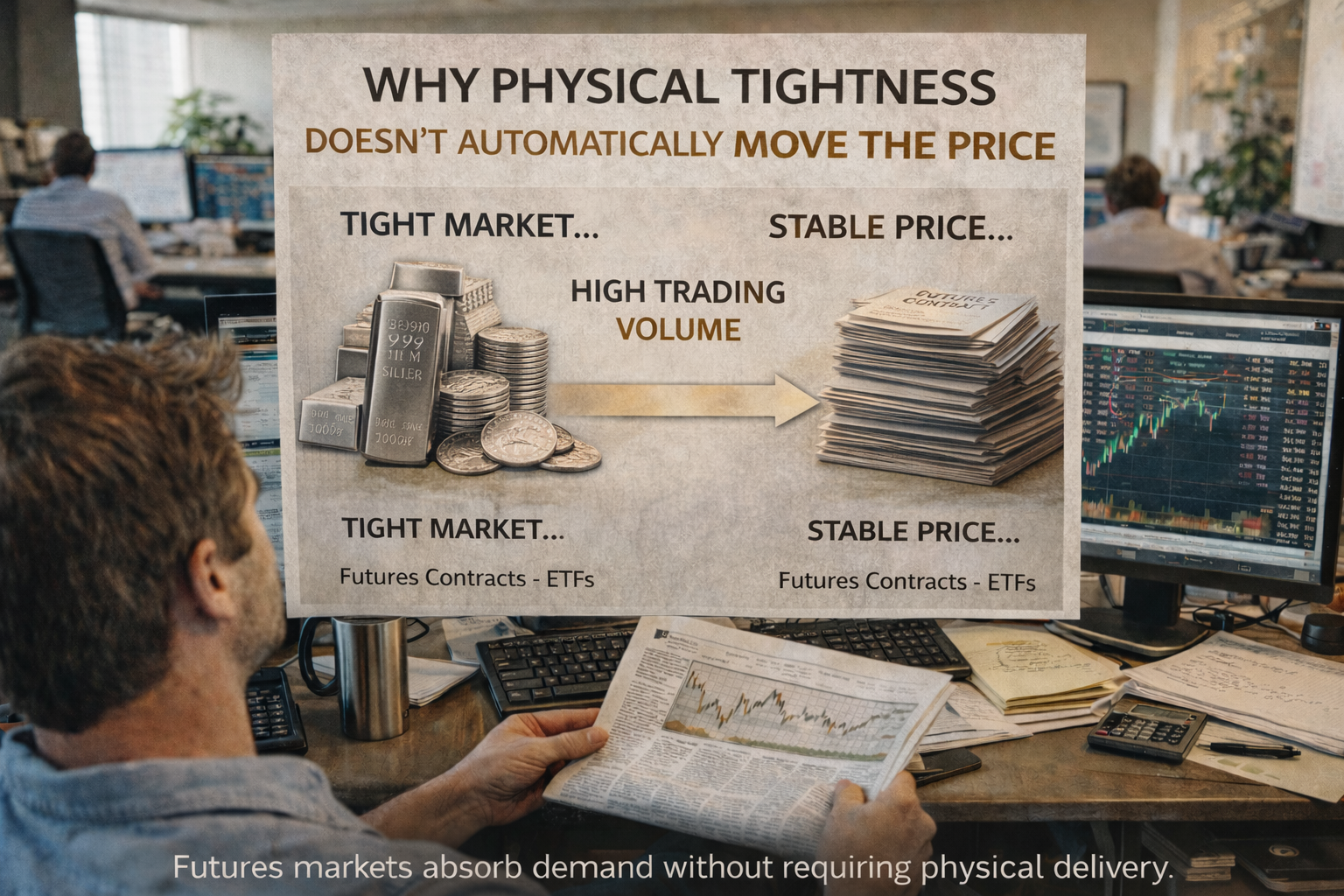
Why Physical Tightness Doesn’t Automatically Move the Price
In most commodities, shortages cause prices to spike because buyers compete for supply.
Silver is different.
When demand rises, futures markets often respond by increasing trading volume rather than forcing delivery.
As long as contracts settle financially instead of physically, pressure stays contained.
The system isn’t designed to reflect scarcity — it’s designed to maximize liquidity.
That structure keeps prices stable even as physical availability quietly tightens.
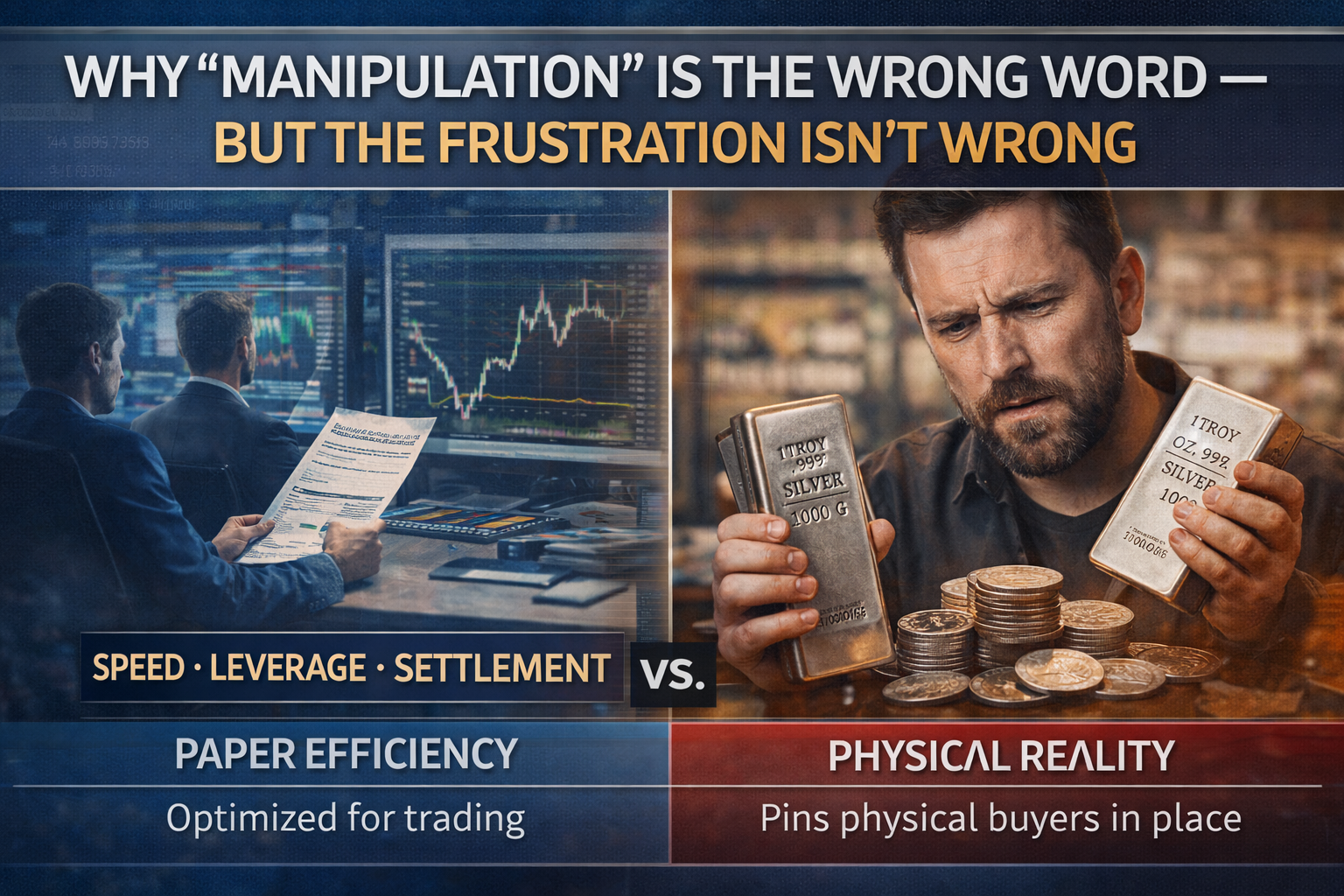
Why “Manipulation” Is the Wrong Word — But the Frustration Isn’t Wrong
Calling this manipulation oversimplifies what’s happening.
What we’re seeing is a market optimized for speed, leverage, and settlement — not for physical delivery.
Large participants operate within the rules of that system.
That doesn’t mean the outcome feels fair to physical silver holders.
It means the rules favor paper efficiency over physical reality.
Understanding that distinction is critical — because it changes how you approach silver as an investment.
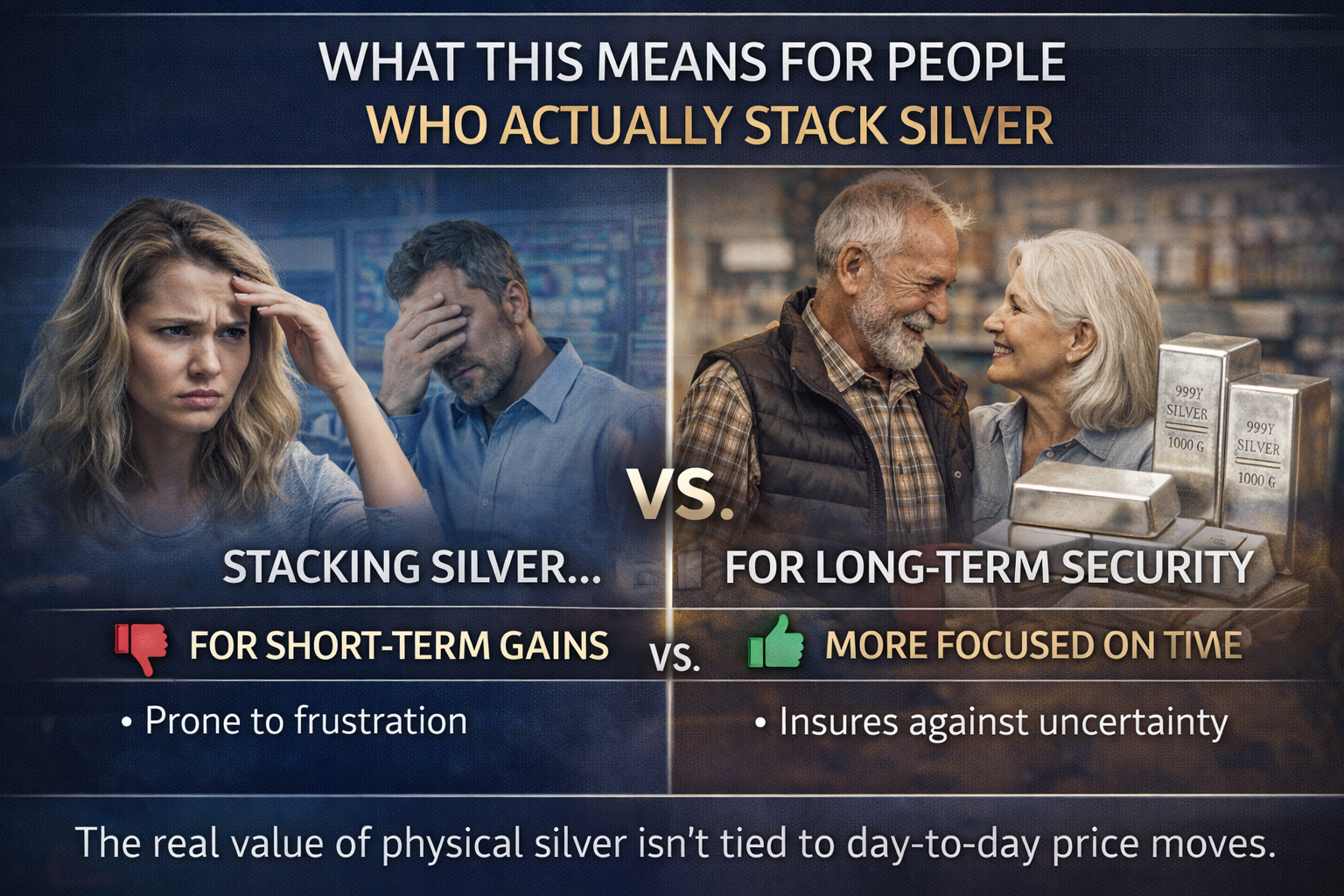
What This Means for People Who Actually Stack Silver
If you’re stacking silver expecting the spot price to instantly reflect physical shortages, you’re likely to stay frustrated.
If you’re stacking silver as long-term insurance against currency risk, systemic stress, or purchasing power erosion, the picture looks very different.
Physical silver doesn’t need explosive pricing to be doing its job.
Its value lies in ownership — not volatility.
Ironically, the same structure that suppresses dramatic price moves is also what keeps silver undervalued relative to its role.
The Question Most Investors Aren’t Asking
The real question isn’t:
“Why hasn’t silver exploded?”
The real question is:
“What happens if the system ever demands physical settlement at scale?”
That’s where the current structure stops being invisible.
And that’s why many experienced investors continue stacking — quietly, patiently, and without expecting headlines.
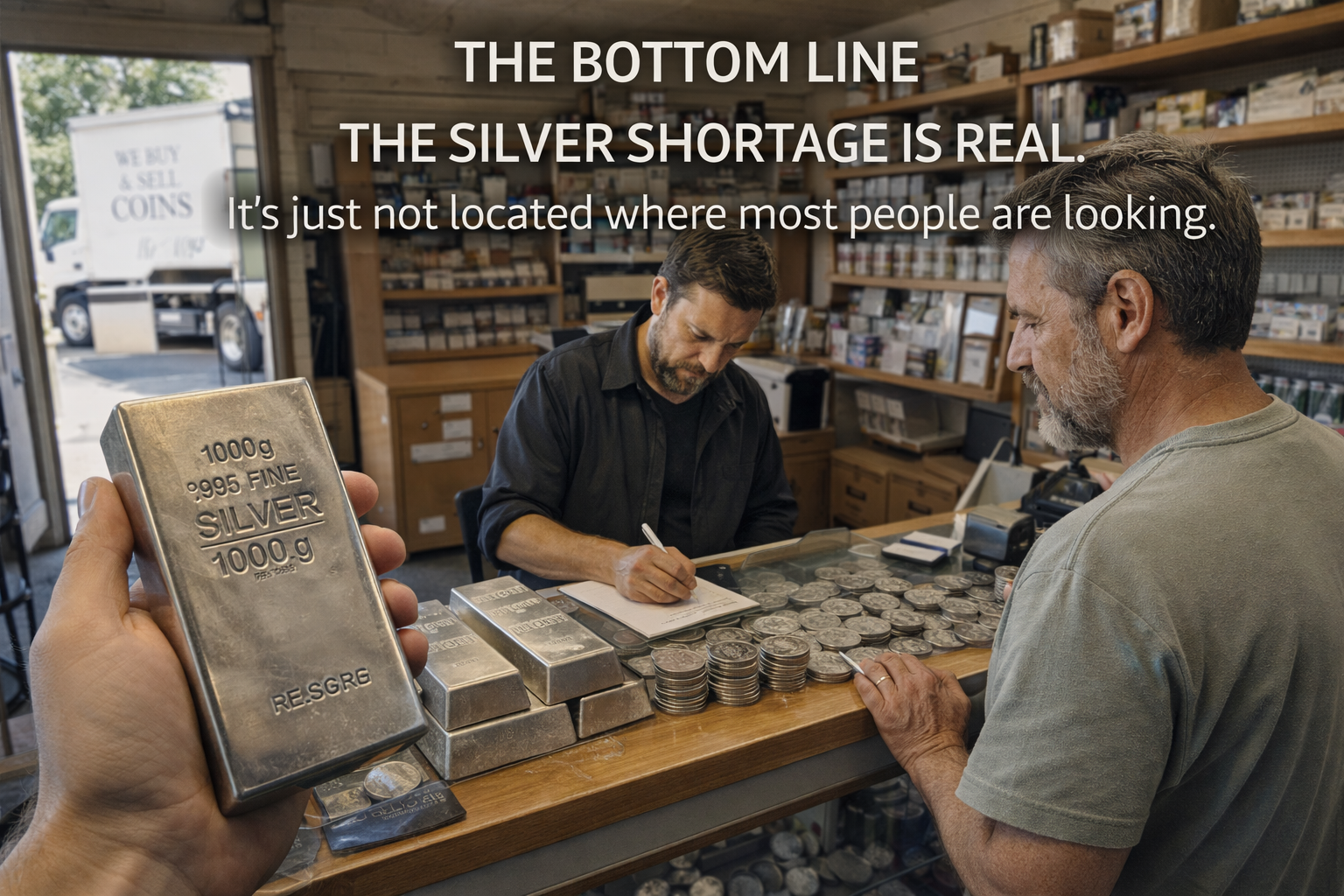
The Bottom Line
The silver shortage is real.
It’s just not located where most people are looking.
Prices haven’t exploded because the system absorbs stress through paper mechanisms — not because silver lacks demand.
Understanding that difference turns frustration into clarity.
And clarity is what separates speculation from conviction.